
Updated
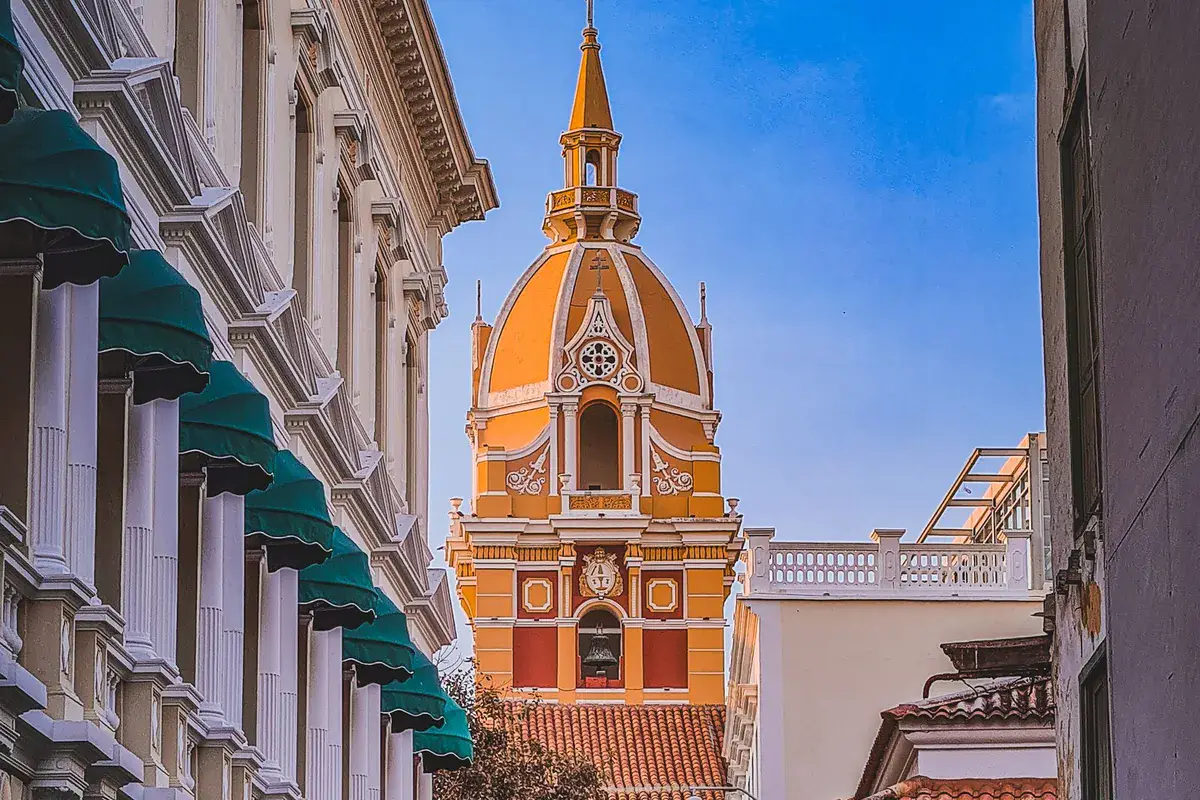
Cartagena has become one of the most recognizable names in Colombian medical travel: a walled Caribbean city with direct flights to the United States, Central America and Europe, inside a country that ranks among the ten busiest in the world for aesthetic surgery. This report gathers the public data behind that picture (who visits Cartagena, which procedures are most common in Colombia, how long international patients typically plan to stay and what safety bodies recommend) so patients, journalists and researchers can work from verifiable numbers instead of marketing claims.
Key takeaways (2026 edition)
- Colombia performed 490,944 aesthetic procedures in 2024 (321,408 surgical), ranking 10th worldwide for surgical procedures, according to the ISAPS Global Survey. (ISAPS)
- Surgeons in Colombia reported that on average 30% of their patients came from other locations (median 20%), with the United States, Spain and Canada as the leading origins. (ISAPS)
- Cartagena received 853,789 foreign non-resident visitors in 2025, about 18% of Colombia's total; 29.7% lived in the United States. (Migración Colombia / MinCIT open data)
- Travelers whose main purpose was medical treatment or wellness had the highest average spend per trip in DANE's inbound survey: USD 3,599.7. (DANE)
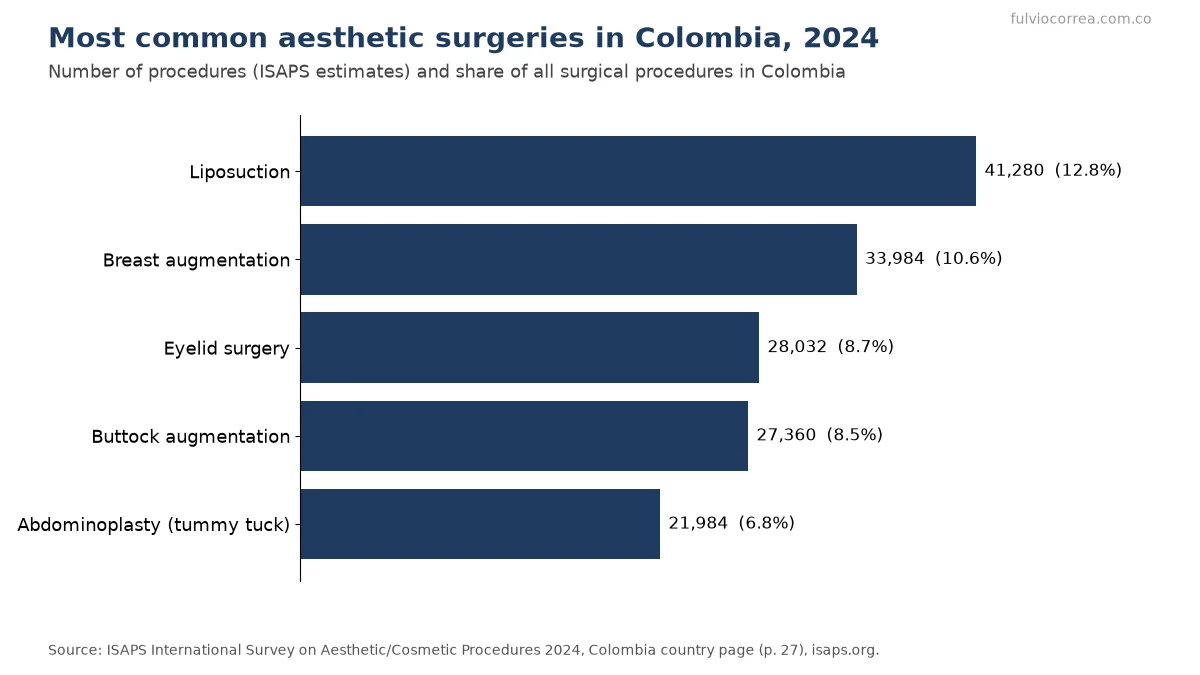
- Liposuction was the most common aesthetic surgery in Colombia (41,280 procedures), followed by breast augmentation, eyelid surgery, buttock augmentation and abdominoplasty. (ISAPS)
- Safety bodies agree on the essentials: verify the surgeon and facility, plan the stay around recovery instead of vacation, and arrange follow-up before you fly home. (ASPS, CDC)
Cartagena as a destination for international patients
Cartagena's appeal to medical travelers starts with access. According to the city's tourism corporation, Corpoturismo, Rafael Núñez International Airport had 547 weekly direct flights to 21 destinations as of June 2026, including 113 weekly international frequencies: Panama City (32), Miami (15), Lima (10), Mexico City (10), New York-JFK (7), Amsterdam (7), Fort Lauderdale (6) and Atlanta (3), plus seasonal routes such as Toronto, Montreal and Madrid. New service to Houston and Washington-Dulles is scheduled from December 17, 2026. (Caracol Radio, Aug 16, 2026)
Aerocivil figures compiled by Cartagena Cómo Vamos show 3,815,429 air passengers arriving in Cartagena in 2025 (+2.8%), making it the third-busiest arrival city in Colombia after Bogotá and Medellín. Of those, 736,910 arrived on international flights, up from 711,714 in 2024. (Cartagena Cómo Vamos)
For patients, those direct routes matter for more than convenience. Fewer connections mean shorter travel days after surgery, and several U.S. gateways reach Cartagena without a stop. That is still not a reason to shorten recovery time; flight timing is covered below.
Tourism and medical tourism: what the data shows
Foreign visitors keep arriving in record numbers
Colombia received 4,677,578 foreign non-resident visitors in 2025, up 3.8% on 2024 and about 66% above 2019's pre-pandemic level, according to Migración Colombia data published by the Ministry of Commerce, Industry and Tourism (MinCIT). (MinCIT) Tourism brought in a record US$11,166 million in foreign-exchange income in 2025 (+9.4%), per ProColombia. (ProColombia)
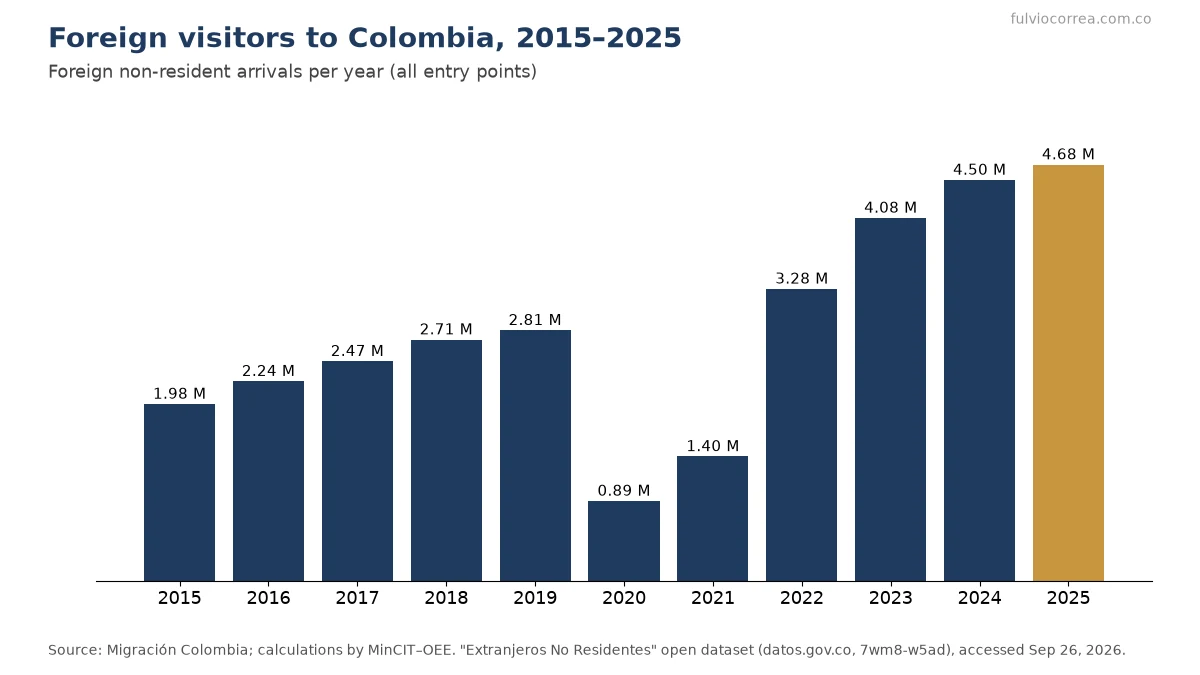
Cartagena, as a declared destination city, received 853,789 foreign visitors in 2025, roughly flat on 2024 (851,087) and 61% above 2019 (528,687). Bolívar, the department that contains Cartagena, accounted for 19.5% of foreign arrivals nationwide from January to July 2026, behind Bogotá (34.4%) and Antioquia (26.3%). (MinCIT)
2026 is softer so far. Foreign visitors to Cartagena fell 2.2% in the first half of 2026 (441,151 vs. 450,952), and nationally foreign arrivals were down 2.6% from January to July, with visitors from the United States down 8.1%. International regular-flight arrivals at Cartagena's airport fell 10.7% in the first half, while domestic arrivals grew 6.4%. (datos.gov.co, MinCIT)
How big is medical tourism in Colombia?
No official source publishes a Cartagena-specific count of medical tourists, so the best available picture combines several national indicators:
- Surgeon surveys: in ISAPS's 2024 survey, surgeons in Colombia reported that an average of 30.0% of their patients (median 20.0%) traveled from other locations. ISAPS listed Colombia, Tunisia, the UAE and Türkiye among the countries with the highest share of foreign patients. (ISAPS)
- Visitor spending: in DANE's inbound visitor survey for January–March 2025, 2.4% of air visitors (12,125 trips) came mainly for medical treatment or wellness, and that group had the highest average spend of any travel purpose: USD 3,599.7 per trip, or USD 183.9 per night. (DANE)
- Immigration records: Migración Colombia logged 20,218 foreign entries declaring "medical treatment" as their activity from January to September 2025, led by U.S. nationals (8,283), people from the former Netherlands Antilles (3,473) and Panamanians (1,547). (Migración Colombia) Treat this as a floor: many patients enter as ordinary tourists.
Where international visitors come from
The United States dominates foreign arrivals to Cartagena. Of the 853,789 foreign non-resident visitors in 2025, 253,345 lived in the U.S. (29.7%), followed by Peru, Mexico, Ecuador, Chile and Brazil. Canada (25,100) and Spain (14,261), two of the leading origins that ISAPS reports for Colombian plastic surgery, also appear in the top dozen.
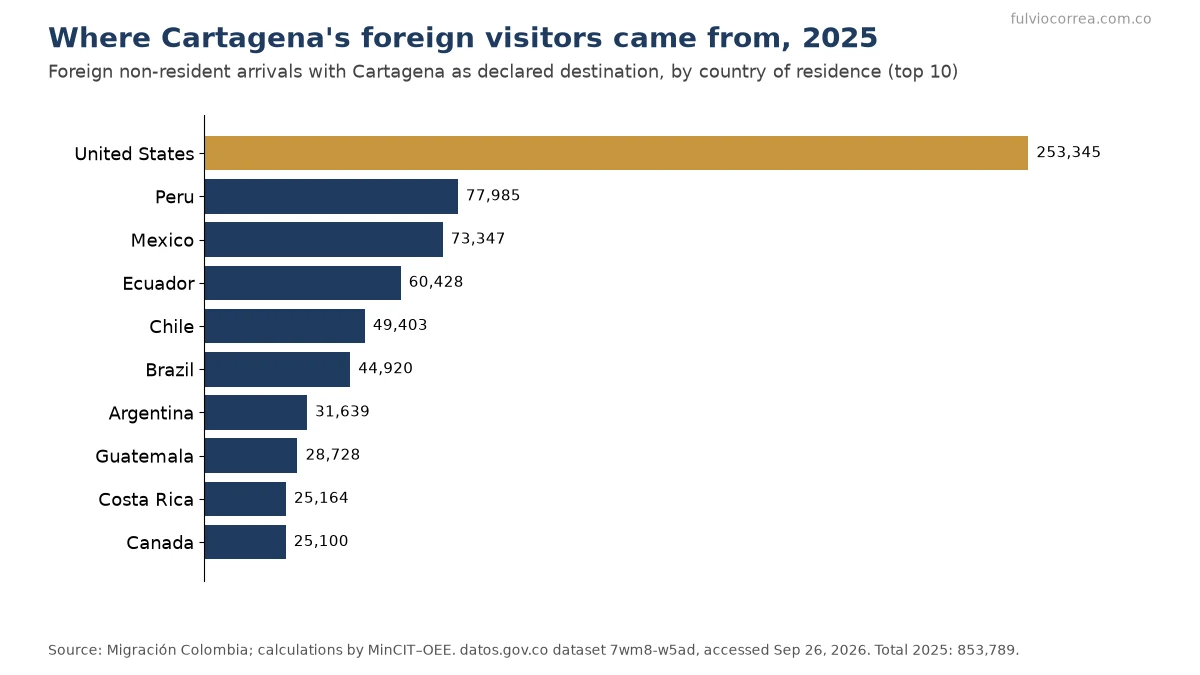
These figures describe all foreign visitors, not surgical patients. They show which markets already travel to Cartagena in volume and which direct routes serve them. The city's international air traffic follows a similar pattern: by flight origin, the U.S. (279,533 arrivals) and Panama (225,154), a major connecting hub, led in 2025. (Cartagena Cómo Vamos)
Plastic surgery trends: Colombia and the U.S.
Colombia's place in global aesthetic surgery
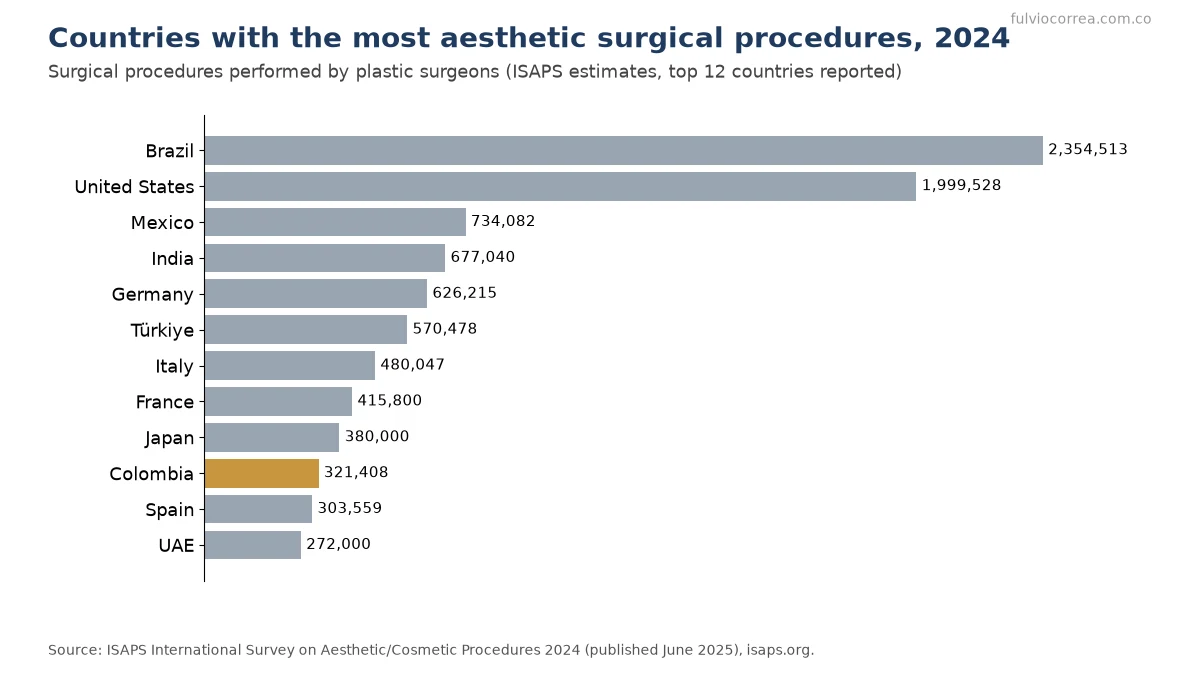
ISAPS estimates that 37.9 million aesthetic procedures were performed worldwide in 2024, 17.4 million of them surgical. Colombia recorded 490,944 procedures, 321,408 surgical and 169,536 non-surgical, placing it 10th in the world for surgical volume, just ahead of Spain and behind Japan. The country has an estimated 960 plastic surgeons. (ISAPS) The Colombian Society of Plastic Surgery (SCCP) noted that the total grew about 10% from 447,268 in 2023. (SCCP)
Most common aesthetic surgeries in Colombia
Body contouring leads. In 2024, the most common surgeries in Colombia were liposuction (41,280; 12.8% of surgical procedures), breast augmentation (33,984; 10.6%), eyelid surgery (28,032; 8.7%), buttock augmentation (27,360; 8.5%) and abdominoplasty (21,984; 6.8%). Colombia ranked 8th in the world for liposuction and 10th for breast augmentation. (ISAPS)
What is changing in the U.S., the largest source market
The American Society of Plastic Surgeons (ASPS) reported a 7% rise in procedures in 2025. Its top five cosmetic surgeries were liposuction (317,196), breast augmentation and implant revision (304,234, +11%), tummy tuck (173,251), breast lift (156,131, +8%) and eyelid surgery (118,978, +19%). Brazilian butt lifts fell 5%, and 82% of ASPS members said patients were asking about procedures linked to GLP-1 weight loss, a trend that tends to increase interest in skin-tightening and lifting procedures. (ASPS)
Coming next: ISAPS will release its 2025 Global Survey on September 29, 2026. This report will be updated with the new figures.
Planning the trip
The U.S. Centers for Disease Control and Prevention (CDC) recommends a pre-travel consultation at least 4–6 weeks before departure, a written agreement covering what the treatment includes, copies of your medical records, and a plan for follow-up care at home. It also recommends checking facility accreditation and clinician credentials. (CDC)
A practical planning checklist:
- Start with an assessment, not a flight. Share your medical history and goals first; book travel only once a surgeon has confirmed you are a candidate and proposed a date.
- Build the trip around recovery. Choose lodging with an elevator, easy transport to the clinic and space to rest. Leave beaches, boat trips and alcohol for another visit. ASPS specifically warns against sunbathing, swimming and tours after surgery. (ASPS)
- Bring a companion for at least the first days, and carry a list of medications and allergies in English and Spanish.
- Book flexible return flights in case your surgeon asks you to stay longer.
- Line up care at home before you leave: a primary-care doctor or local surgeon who knows you had surgery abroad.
For logistics specific to our practice, see the travel guide for international patients.
Pre-assessment: in person or virtual
A careful pre-assessment is the first safety filter. The ASPS practice reference on patients who travel for surgery recommends that surgeon and patient agree on the length of stay in advance, assess blood-clot (VTE) risk, and plan for follow-up care, including telehealth where appropriate. (ASPS)
Dr. Fulvio Correa evaluates every patient in person or through a virtual consultation before any surgery is scheduled. In general, a virtual assessment reviews medical history, medications, previous surgeries and goals together with photographs, and the surgical plan is confirmed with a physical examination before surgery. Dr. Correa is a full member (Miembro de Número) of the Colombian Society of Plastic, Aesthetic and Reconstructive Surgery (SCCP), which you can verify on the SCCP website.
Stay and recovery by procedure
How long you stay depends on the procedure, whether procedures are combined, your health and your surgeon's assessment. The ranges below come from general patient-education sources and vary from patient to patient; they are not a substitute for an individual plan.
| Procedure | Typical return to desk work | Before strenuous exercise | Guidance on flying |
|---|---|---|---|
| Liposuction | A few days (outpatient cases) | Up to 6 weeks | ASPS: wait 5–7 days after body procedures |
| Breast augmentation | At least 3 days; ≥3 weeks for physical jobs | No heavy lifting for ≥4 weeks | ASPS: 5–7 days after body procedures; CDC: 10–14 days after major surgery, especially chest surgery |
| Tummy tuck | At least 1 week | 4–6 weeks | CDC: 10–14 days after major surgery |
| Brazilian butt lift (BBL) | 10–14 days; no sitting on the buttocks for ≥2 weeks | Full recovery 2–3 months | ASPS: stay at least 4–5 days and move every hour when traveling |
| Mommy makeover | 1–2 weeks | No heavy lifting for 4–6 weeks | Combined surgery: follow the longest applicable window |
Sources: Cleveland Clinic on liposuction, breast augmentation, tummy tuck, BBL and mommy makeover; ASPS briefing paper; ASPS on BBL travel; CDC.
For procedure-specific detail, see our guides to liposuction in Cartagena, breast augmentation in Colombia, tummy tuck in Colombia, BBL in Colombia and how long to stay after a mommy makeover.
Safety and patient selection
What the evidence says about complications after surgery abroad
Most published data on complications comes from patients treated at home after surgery abroad, so it shows what can go wrong rather than how often:
- A CDC review of consultations from 2014–2024 found 21 published reports covering about 145 patients with adverse outcomes after cosmetic procedures linked to travel. (CDC, 2026)
- A systematic review of 214 patients treated in the U.S. for complications after cosmetic surgery abroad found that 50.9% had infections, 36.8% were hospitalized and 51.8% needed further surgery. Most had traveled to the Dominican Republic (82.7%); 3.7% had traveled to Colombia. (McAuliffe et al., 2023)
- A review of 370 patients with infectious complications identified abdominoplasty as the most frequent procedure and gluteal augmentation as the source of the most severe cases. (Gilardi et al., JPRAS 2023)
Data from Cartagena itself shows a different side of medical travel: a survey of 460 international patients treated at a private plastic surgery practice in the city between 2016 and 2018 found that 98.2% would recommend the experience. It is a single-practice satisfaction study, not a complication-rate study. (Campbell et al., PRS Global Open 2020)
How to check a surgeon and facility in Colombia
In May 2026, the SCCP published five recommendations for anyone considering aesthetic surgery: verify the surgeon's training and registration in ReTHUS (Colombia's national registry of health professionals), confirm the facility is authorized by the local health authority, insist on a full medical assessment, distrust promises of "painless" or "immediate" results, and make sure post-operative follow-up is part of the plan. (El Tiempo, May 19, 2026) You can confirm society membership with the SCCP surgeon finder.
Good patient selection also means knowing when to say no or when to stage procedures: long operating times, several procedures combined in one session, a high blood-clot risk or unstable weight all deserve an explicit discussion during assessment. ASPS notes that infection is the most common complication among cosmetic surgery tourists and that a long flight soon after surgery raises the risk of blood clots. (ASPS)
Follow-up after you fly home
Follow-up is where many medical trips fall short. Before surgery, ask:
- Who reviews your recovery during your stay, and how often?
- How will you reach the surgical team after you return home, and what warning signs require an urgent visit?
- Will you receive an operative report, a medication list and discharge instructions to share with your doctor at home?
ASPS recommends documenting these arrangements in writing, and the CDC recommends carrying copies of all records home. (ASPS, CDC)
Considering surgery in Cartagena?
Dr. Fulvio Correa is a plastic surgeon in Cartagena, Colombia, and an SCCP member. Explore the procedure pages for liposuction, breast augmentation and the mommy makeover, or learn more about the practice. If you would like an in-person or virtual assessment, you can .
Leer en español: Cirugía plástica y turismo médico en Cartagena, Colombia: informe 2026.
Methodology and sources
This report uses only public, verifiable sources, accessed September 26, 2026:
- Visitor data: Migración Colombia records published as open data by MinCIT (datos.gov.co, dataset "Extranjeros No Residentes", updated August 18, 2026). Cartagena figures use the traveler's declared destination city; country figures use country of residence. 2025 and 2026 figures are preliminary.
- Air traffic: Aerocivil data via MinCIT and Cartagena Cómo Vamos; route counts from Corpoturismo (June 2026).
- Procedure volumes: ISAPS International Survey on Aesthetic/Cosmetic Procedures 2024 (released June 2025) and ASPS 2025 Procedural Statistics (released September 2026). ISAPS figures are survey-based estimates.
- Medical tourism indicators: DANE inbound visitor survey (EVI), Migración Colombia migration-flow report (December 2025) and ISAPS.
- Recovery and safety: CDC, ASPS, Cleveland Clinic, SCCP and peer-reviewed studies cited in each section.
Charts were produced by Dr. Fulvio Correa's editorial team from the sources listed on each chart. No patient data from the practice is included in this edition.
How to cite this report
You may reuse the charts and figures with attribution and a link to this page:
Dr. Fulvio Correa, Plastic Surgery (2026). Plastic Surgery & Medical Tourism in Cartagena, Colombia: 2026 Report. https://fulviocorrea.com/blog/plastic-surgery-medical-tourism-cartagena-colombia/
Update log
- September 26, 2026: First edition published, using ISAPS 2024, ASPS 2025 and Colombian visitor data through June 2026.
- Next update: after the ISAPS 2025 Global Survey is released (scheduled for September 29, 2026).
This report is for general information and does not replace a medical consultation. Recovery times and eligibility vary from person to person and must be determined by a plastic surgeon after an assessment.